
Innovative menstrual health for all: A conversation with Ira Guha, member of the Menstrual Cup Coalition and Founder of Asan
In this interview, we speak with Ira Guha, Founder of Asan – a social venture with a mission to eradicate period poverty and ensure no girl or women is held back by their period. Developed with engineers at the Harvard Innovation Lab, Asan’s innovative menstrual cup is changing how people manage their periods. For every menstrual cup sold, Asan donates one to a woman or girl in rural India, partnering with women-led Non-Governmental Organisations (NGOs) to deliver menstrual health education and distribute the cups to communities who need them most.
With a strong focus on community engagement and education, Asan has seen an incredible 90% adoption rate across the communities they work with. Menstrual cups are more than just a period product—they are a long-term sustainable solution that provide economic freedom, health benefits and empower individuals to be able to live life freely while menstruating.
As a member of the Menstrual Cup Coalition, we sat down with Ira to learn more about Asan’s menstrual cup model works, what drives their success, and what’s next on their journey to provide accessible menstrual cups for all.
Miriam (Menstrual Cup Coalition):
Asan’s distribution program has been very successful — with 90% adoption rates in the villages where cups were distributed to. Could you tell us how Asan was able to achieve this outcome?
Ira:
Yes, so there are three really important factors.
Number one – we work in lots of local and vernacular languages — our education materials come in Hindi, Kanada, Gujarati, Tamil, Bengali, and in Africa, Portuguese and French. Whatever language the community speaks, we develop resources from scratch.
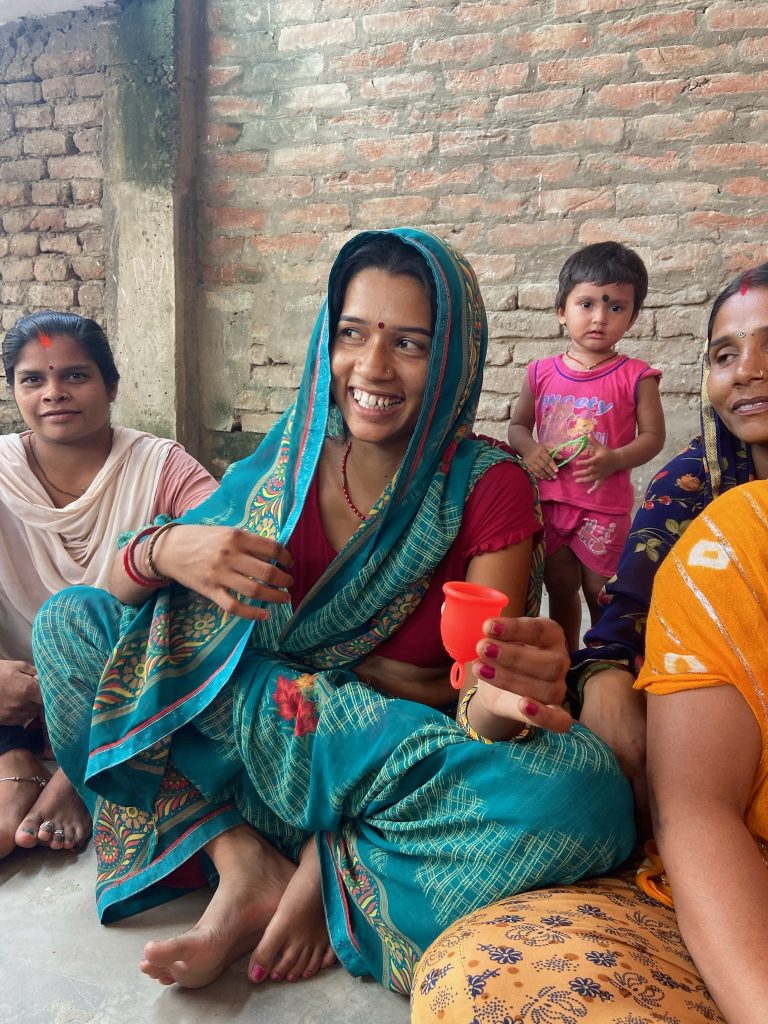
Number two – a hundred percent of education about using the Asan cup comes from a trusted source within the local community. We never send trainers or educators from outside. For example, if you’re trying to get a community of nurses to switch, the education has to come from a nurse within that community. Equally, in a village in South India, it must be in a local language from a woman living in that village — not just someone who speaks the language, but someone trusted from within the village. Asan identifies these local influencers and empowers them to be our educators.
Number three – we don’t stop engaging once we get there. Sometimes it takes two–three months, sometimes up to 12. That’s our commitment to all of our partners. If we’re in a challenging location with only 50% adoption, we study what’s going wrong, address doubts, adapt materials, and continue sessions. We always do at least six months of feedback, follow-up, and focus groups. Our educators live in the community, so they’re always available to answer questions and provide support. It’s a peer-to-peer model with strong network effects — once adoption hits around 50%, word-of-mouth builds enough buzz that others are encouraged to try it.
Miriam:
Can you explain why you chose a community-based model for distribution over other methods for distribution, such as school-based or university-based? Do you think this is key to the high uptake rates you’ve seen?
Ira:
Yes absolutely. A community-based model works better and is definitely the reason we have such high adoption rates. As I mentioned earlier, it’s about having a trusted source and generating network effects.
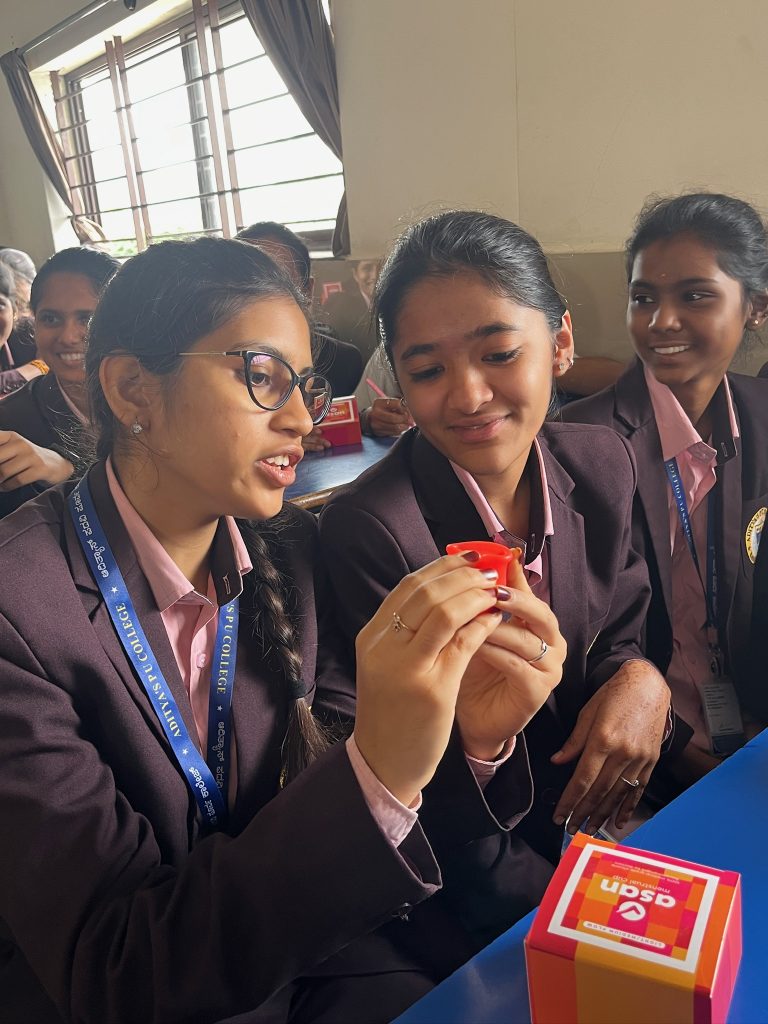
In schools or universities, power dynamics between teachers and students don’t create an open environment for discussing periods — so it’s not a trusted source.
Network effects really take off when everyone in the family is involved. Community sessions foster interaction between mothers, daughters, sisters, and neighbours. For instance, a younger girl might try the product and encourage her hesitant mother, or vice versa. When both mother and daughter get the product together, adoption is much more likely.
If we give the product only to girls in schools, and their families don’t know what it is, there’s often scepticism.
Miriam:
How do you select the locations and communities for your distribution programs? What factors influence your decision?
Ira:
Three factors influence where we work and who we partner with.
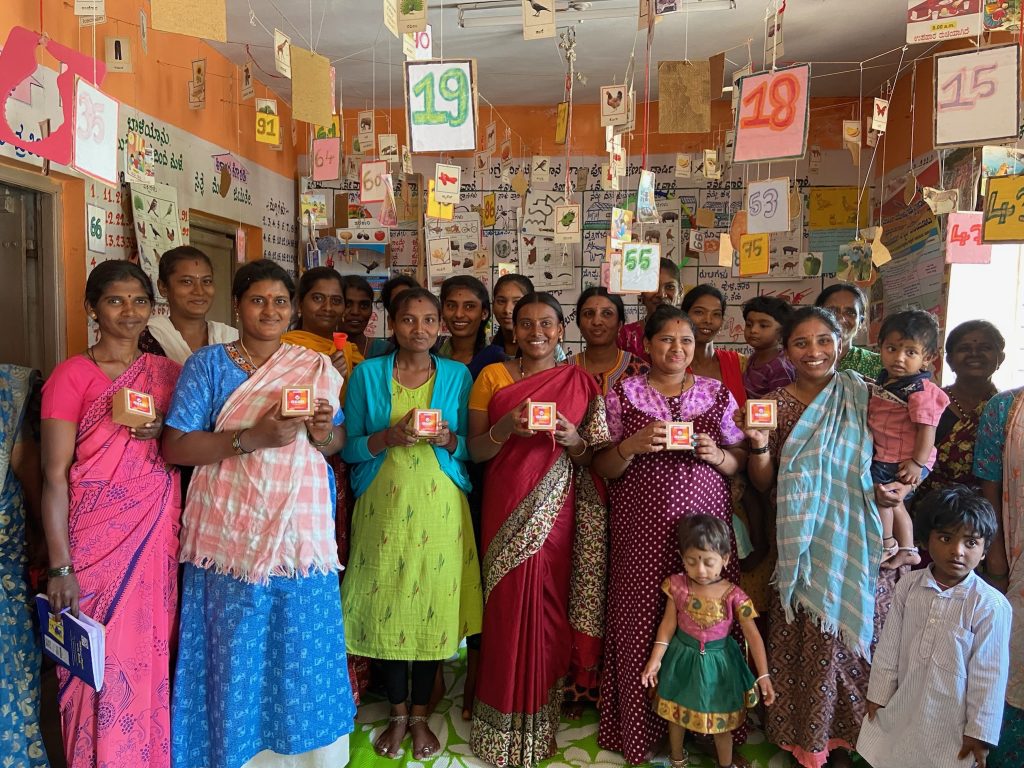
First – the NGO or group must be embedded in the local community. If you’re a non-profit based in a city like Bangalore and travel to villages to distribute goods, that doesn’t work for Asan as you’re not a trusted source and can’t follow up. But if you’re an NGO that’s been working on maternal health in 10 villages for years, the community already trusts you — we’ll work with you.
Second – our partners must be able to commit to a menstrual cup-specific programme. Education takes at least an hour, with multiple rounds of follow-up. We don’t want it squeezed into five minutes of a broader health session — we need dedicated time.
Third – scalability. Our mission is to end period poverty in every region we work in so we don’t do one-off drops of 10 cups here or there. If we work in a factory, we want a commitment that every woman will get the product. In a village, we want every woman and girl to have access. We prove the model works through a pilot and then scale it.
Miriam:
As a company that works closely with its NGO partners in India, how does Asan balance its commercial goals with its charitable missions?
Ira:
Asan partners with a range of non-profit social impact organisations across South Asia and Africa. We are a social venture with a dual commitment: financial sustainability and ending period poverty.
To end period poverty, we have to be self-sustaining — that’s how we ensure long-term impact. The key is stakeholder alignment. Myself as the founder, our advisory board, investors, and team are all equally committed to both sustainability and impact.
We operate a tiered pricing model. If you’re from a higher-income background and buy an Asan cup, you pay more — we make a profit. If you’re a nonprofit, social impact programme, or government, you get the cup at cost — we make no profit. That’s a commitment we’ve made. The model enables us to be financially sustainable while reaching tens of thousands of women each month through our impact programme.
Miriam:
What is your intention for Asan in the coming years? How do you see the company changing and growing?
Ira:
As a founder, I completely believe high-quality menstrual cups are the long-term solution to period poverty — they are the most affordable, safest, and healthiest option for low-income communities.
We’d love Asan to play a big role, but we can’t do it alone. We see ourselves as thought leaders — that’s why I’m doing this interview.
Our programme in Kanakapura, Karnataka, now spans over 100 villages and includes over 40,000 women and girls. As far as we know, it’s the world’s largest menstrual cup adoption programme. We have external researchers studying our approach.
We want to share not just our product, but our behavioural change model with partners around the world so they can replicate it. Everyone — no matter their income or location — should have access to a high-quality cup and never miss out on life because of lack of period care.